A Conversation with James Lansill
Tatler
I've always been a big fan of New York City. Before the COVID-19 pandemic, I visited the city frequently, and it remains one of my favorites. I'm also very familiar with and admire the Flatiron Building, so I was particularly interested when I learned it would be transformed into luxury residences. I hope you can share your experiences involved in this project, your thoughts on it, and some related stories.
James Lansill: If I remember correctly, this building entered the auction market around 2023. However, it wasn't initially listed for residential conversion, but rather because the original ownership partnership had broken down. Unable to reach a consensus on the building's future use, the partners decided to sell it as their exit strategy. The entire auction process was, as reported in the media, quite controversial: one bidder won the first round but failed to raise the required funds, leading to a second round of auctions.
In both rounds of auctions, I communicated with multiple developers. With 32 years of experience in New York new development, I have a wide network of contacts within the industry. While many developers expressed interest in the building, they struggled to determine its optimal use. In the final round of auctions, Brodsky Organization, a professional residential developer with whom I have worked for over 20 years, partnered with one of the winning bidders. We have collaborated on six projects previously, so we have a very strong foundation of trust. Given their focus solely on residential development, we began planning the building's redevelopment before the transaction was finalized (late 2023 or early 2024). For the past two and a half years, we have been dedicated to preparing for the residential listing, and this project has been a significant milestone in my career.
The whole process is a bit complicated.
James Lansill: Although the project was complex, the Flatiron Building itself is breathtakingly beautiful and unique. It occupies a triangular block, and this unique layout creates a sense of open space because there are no neighbors around (only buildings across the street in each direction). In addition, the abundant natural light, excellent views, and extremely high ceilings further enhance the building's beauty. How high is the ceiling exactly?
James Lansill: The ceiling height of the new residence is between 3.1 and 4.1 meters. It has been a great honor for us to be involved in this project, a sentiment shared by all the team members who have been involved for the past two and a half years. Our shared goal is to respect and honor this building, which will celebrate its 125th anniversary in 2027. Leading a new chapter in the history of a 125-year-old landmark is a responsibility that fills us with humility, so every decision we make has been carefully considered.
I completely understand. Given the building's iconic status, rich history, and exceptional beauty, everyone involved must feel a profound sense of responsibility.
James Lansill: That's right.
Looking back over the past two and a half years, what conversations, meetings, or site visits have left the deepest impression on you? What are some particularly memorable moments from your team's collaborative development process?
James Lansill: There are a few memorable moments, such as the decision to redesign the core structure of the elevator.
The building originally had nine elevators, as well as fire escape staircases running throughout the building. Despite numerous attempts to design around these existing facilities, none of the resulting layouts were practical. Therefore, we made the difficult decision to completely demolish the existing elevators and fire escape staircases and redesign the building.
This completely removed the central part of the building, creating an open space that extends from the ground floor to the ceiling. Although the exterior of the building remained intact, the interior was completely opened up from top to bottom. Walking inside the building and witnessing the steel frame structure fully exposed was a truly awe-inspiring experience, and it became one of the most unforgettable moments of my entire career.
I've also climbed to the roof of my penthouse apartment many times at sunset. Standing 100 meters above the heart of New York City, admiring the East River, the Hudson River, the southern tip of Manhattan, and the entire Midtown area to the north, is an exhilarating experience.
Another moment that left a particularly deep impression on me during the project was when the new windows were installed—the brand-new wooden windows fit seamlessly into the original window frames of the old building, blending modern design with the building's original historical style. These kinds of moments made the project incredibly meaningful.
What are the unique aspects of the spatial layout in this residential renovation? How were the number of units per floor, the size of each unit, the floor layout, and the elevator location determined? Are there any particularly interesting or ingenious design elements you could share?
James Lansill: We spent six to eight months discussing and testing various spatial layout options, drawing detailed plans for everything from seven apartments per floor to one per floor. Simultaneously, demolition work was underway inside the building, finally bringing back the old office spaces that had been sealed off for 123 years. They were raw, clean, and unadorned, with only windows along the walls and exposed floors. It was this "purity" that allowed us to truly understand the building's hidden value.
Through rigorous scheme testing and on-site evaluation, we finalized the layout of two residential units per floor: one facing north and one facing south. Each unit is spacious, ranging in size from 325 to 418 square meters. Larger units command higher prices, thus this decision also exposes the developer, partners, and lenders to greater financial risk.
I never expected there to be only two units per floor! So how many apartments are there in total?
James Lansill: We initially planned for 38 homes, but because a client recently bought an entire floor and intends to combine two homes, there are now 37 homes in total. Floors 20 and 21 are entire floors of homes, each with an area of over 696 square meters, one of which sold for $58.5 million last week.
Congratulations on the sale. I didn't expect this building to be so large, yet have so few units.
James Lansill: Many people feel the same way when they see this building from the street. However, once you step inside and experience the spaciousness of the residences, you realize that the number of units is perfectly reasonable. Meanwhile, the market performance has proven our decision correct: we started sales in early February and have already signed 11 contracts, with a 12th contract under negotiation.
That's a fantastic start! You mentioned show flats, are they already furnished?
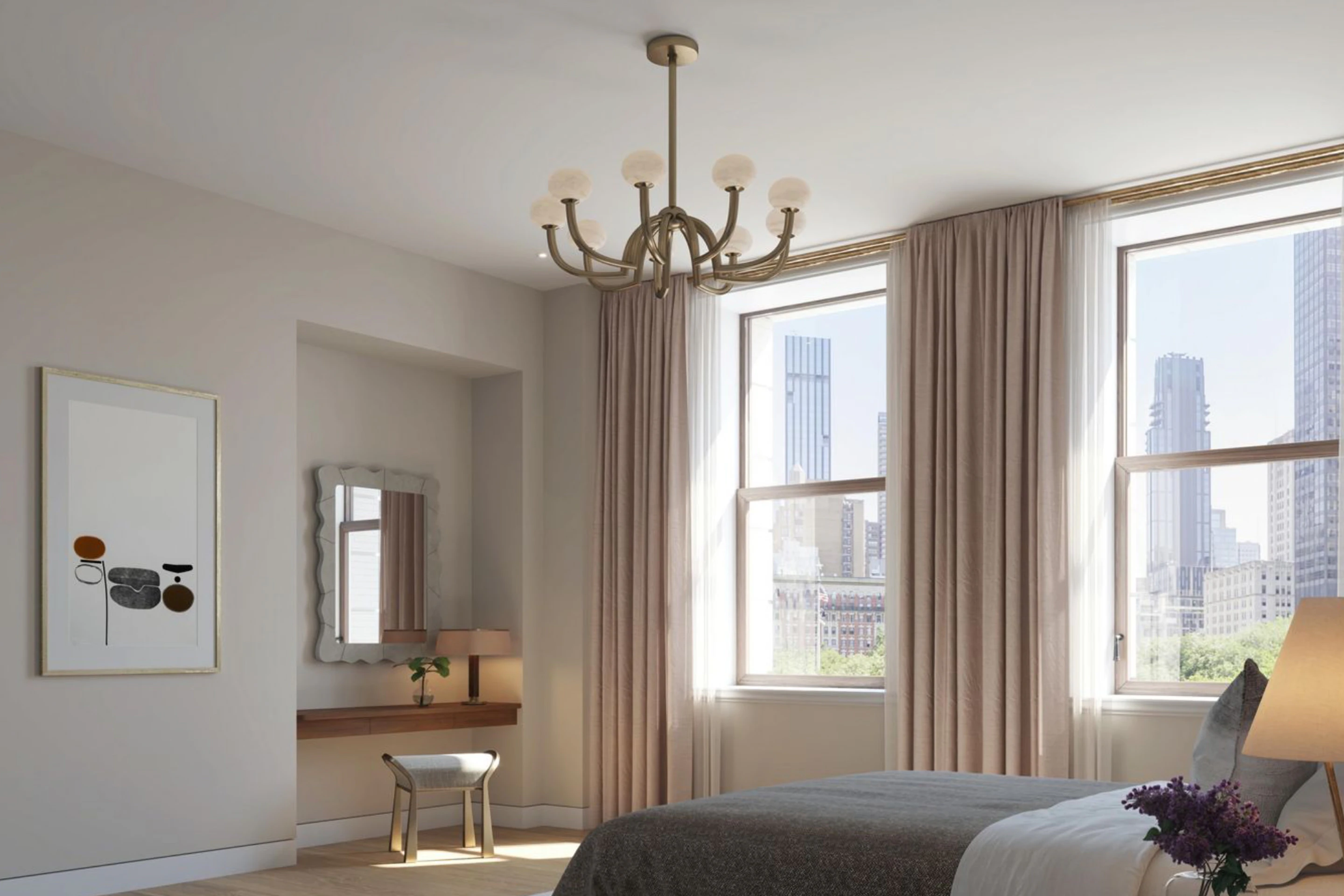
James Lansill: The show flat is fully furnished, including complete flooring, a kitchen, window trim, and a beautifully appointed bathroom. We collaborated with designer William Sofield on this project; he's a highly experienced veteran who has designed spaces for Gucci and Tom Ford. While his design style leans towards modern, he also possesses a deep understanding of history, making him an excellent choice for our collaboration.
Sofield skillfully balanced the overall design: he used elements that echoed the building's original style, such as hand-trimmed small tiles, while also incorporating distinctly modern elements, such as the Poliform kitchen cabinets made of dark steel. This tension between old and new elements perfectly reflects the historical heritage of the Flatiron Building.
I know several people who have invested in those famous, narrow, tall mansions south of Central Park. Despite some negative press, that area has been highly sought after by wealthy buyers for years, especially those not residing in the U.S. In your opinion, what's the difference between the Flatiron Building and the buildings on "Billionaire Street" overlooking Central Park?
James Lansill: First of all, the Flatiron Building is located in Midtown Manhattan, which I think has a more vibrant atmosphere than Uptown. Flatiron boasts many of New York's top restaurants, all within a few blocks. Across the street is Eataly, a large shopping and dining complex, and 11 Madison Park, once named "World's Best Restaurant," is just two blocks away. We can see that this is a vibrant and popular neighborhood.
Furthermore, the building is only 24 stories high, making it closer to the ground. Many people, especially those living outside the United States, do not prefer living too high up. At the same time, the building's heavy, stacked components create a robust structure, fostering a sense of stability and making the interior spaces feel safe and private.
One of the defining characteristics of the Flatiron Building is its tranquility. Despite its location in the heart of a bustling metropolis, the interior is remarkably serene. You can feel the vibrant energy unique to New York City surrounding the building, yet the interior remains surprisingly quiet—a feature that has delighted many buyers.
Furthermore, the building's scale inherently possesses a refined and elegant quality. The community comprises only 37 residences, creating a warm and welcoming atmosphere and preventing residents from feeling lost in a vast but impersonal building. In contrast, many high-rise buildings on "Billionaire Street" appear somewhat monotonous and repetitive in design, lacking the unique charm of the Flatiron Building. This building is one of a kind; you won't find another like it in New York, or even in the world.
This is indeed very unique. You mentioned the building's steel frame structure earlier; besides that, what other unique design elements reflect its historical significance?
James Lansill: Absolutely. While dismantling the building's core structure, we were deeply impressed by the beauty of the original steel frame. The diagonal beams, large rivets, and sturdy columns from 1901 all showcased the extraordinary craftsmanship of the past. These steel frames not only served a practical function but were also an important part of the building's history. Therefore, after careful consideration, we decided to retain some steel frame elements in the residence, including the columns in the living room, dressing room, and master bathroom, all of which have undergone special coating treatments to highlight their industrial-style elegance.
Our choice was based on the building itself. By preserving these elements, a striking contrast was created between the building's historical roots and modern amenities, a balance that deeply resonated with buyers who appreciate both historical heritage and luxurious experiences.
I understand that this building was originally started in 1901 and was built very quickly. Can you talk about how it differs from your current renovation process?
James Lansill: By today's standards, this construction speed is truly astonishing. Construction began in October 1901, and the first tenants moved in in September 1902—meaning it took only 11 months from groundbreaking to official opening. In today's New York City, even with modern building technology, it would take three to five years to complete a project of this scale. The speed of construction in the past fully demonstrates the wisdom of the original builders and their focus on simple design that prioritizes function and efficiency.
In contrast, our renovation process is much slower because it requires meeting historical preservation requirements, modern building codes, and respecting the building's historical heritage. We are not just building new spaces, but preserving a landmark building. We expect to open the building to residents in September 2026, three years after the project's planning began, which fully demonstrates the meticulousness and rigor required for our project.
Given the uniqueness of this building, what marketing strategies did you employ to reach your target customers? Did you use traditional advertising methods, or did you adopt a more targeted approach?
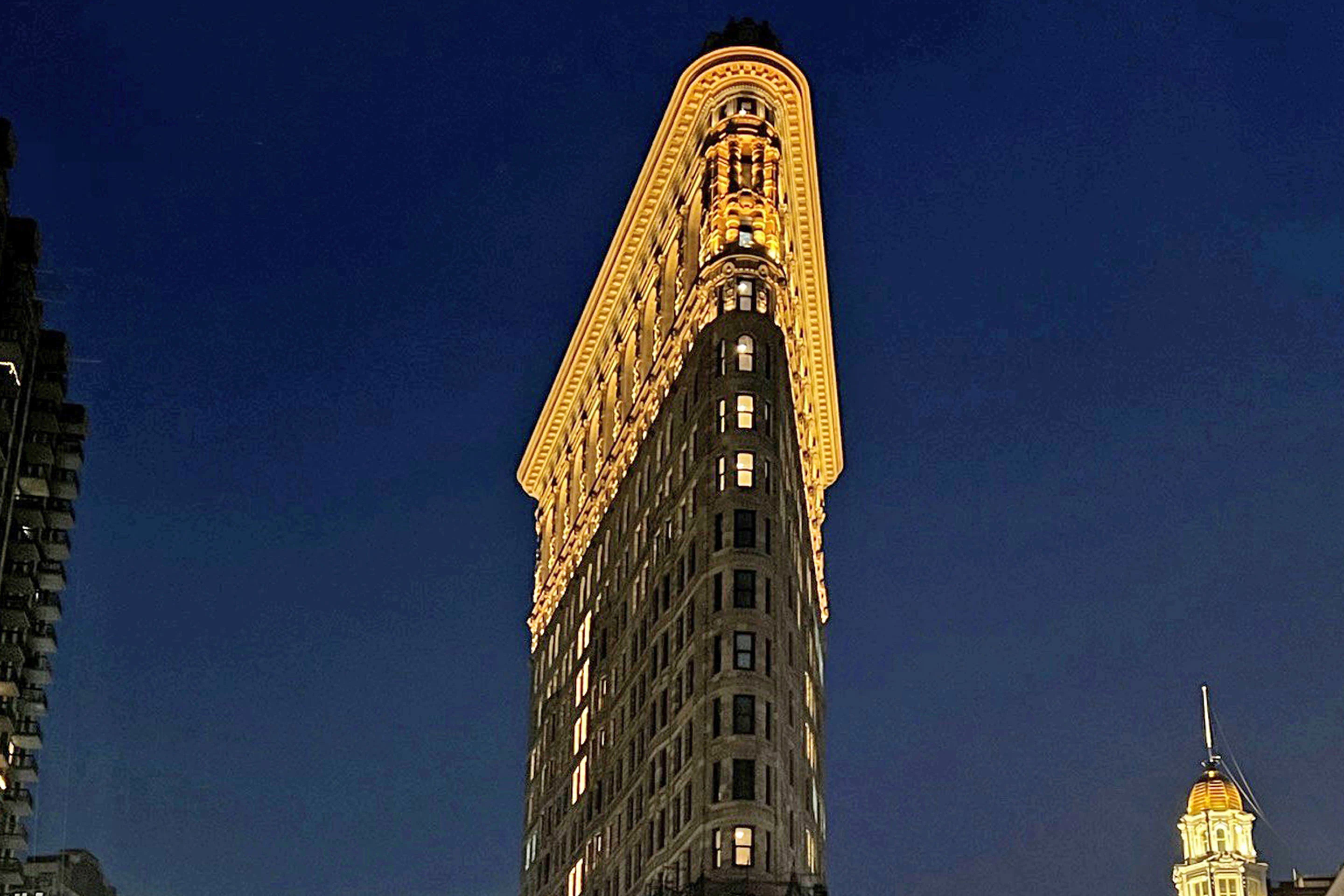
James Lansill: Our marketing strategy is to keep a low profile and avoid any traditional promotional activities. The Flatiron Building itself and its historical heritage speak for themselves. Every time we complete a transaction, the relevant information is recorded in the government's public system, and many media outlets proactively report on it, thus generating spontaneous attention. This strategy aims to attract high-caliber buyers who are already well-informed about the building, rather than blindly expanding the reach of promotion. Although our appointment numbers are not high, the clients who come to visit are serious, discerning buyers with purchasing power. It is precisely because these buyers recognize the value of the building and believe it is irreplaceable that our conversion rate is very high. Moreover, the scaffolding erected around the building during the renovation has now been removed, and the restored facade is finally revealed, allowing people to witness the building's magnificent beauty firsthand, which has also generated even more attention.
You mentioned that 11 contracts have been signed so far. Could you share some information about the buyers? Are there any international buyers, especially from Asia?
James Lansill: We cannot disclose specific buyer information, but I can say that our clients come from all over the world, and our buyer base is very diverse. To date, the majority of transactions have been with New York City residents, many of whom live in the surrounding area and are planning to upgrade their homes. We also have international clients; overall, the ratio of local to international buyers is balanced, and the market is performing well.
What all the buyers had in common was their pursuit of unique, irreplaceable treasures. They could afford luxury properties anywhere in the world, yet they were drawn to the Flatiron Building because of its rich history, distinctive character, and unparalleled charm.
Could you tell us about the amenities offered by this building? What special features highlight its luxurious status?
James Lansill: The amenities we provide are both elegant and practical, and complement the overall style of the building. The lobby features a double-height design, is equipped with doormen and concierge services, and has dedicated elevators that lead directly to the private foyer of each residence, ensuring residents enjoy a high degree of privacy and an exclusive experience.
James Lansill: In the basement, we have a nearly 20-meter-long double-height swimming pool, with a glass skylight above it connecting to a 465-square-meter gym. The gym, also designed by
William Sofield, features a spa, cold tub, sauna, and changing rooms.
James Lansill: On the mezzanine level, there's a landscaped lounge overlooking Madison Square Park, as well as a billiards room. The park-view lounge will offer catering services, handled by the building's own restaurant, where residents can order cocktails or snacks via automated delivery elevators – convenient and luxurious. With only 37 residences in the building, these facilities feel like a private club exclusively for the community.
Finally, what moments during your participation in this project were the most memorable? Was there a particular moment that was especially impressive or unexpected? Try to recall.
James Lansill: My most unforgettable...
From the street, you can see that this building has 24 floors. On the top floor is an apartment built in 1903, originally intended to provide artists with studios for them to paint. However, times have changed, and nowadays the top floor of the building is no longer reserved for artists.
This penthouse was like a secret project, surrounded by tall railings that obstructed the view. We were constantly figuring out how to transform it into the ideal penthouse. A few of us went up to the roof ourselves, where we discussed whether to build a small viewing terrace. However, building new terrace facilities on the roof would be extremely expensive and would require a permit from Landmarks, the organization responsible for approving the legality of building projects. And in New York City, there are few landmarks more famous than the Flatiron Building, so we knew that obtaining a permit for this rooftop terrace would be incredibly difficult.
James Lansill: Even so, that afternoon, as a few key decision-makers stood on the top floor, surrounded by the dazzling city views, we unanimously decided that this was something we had
to do. As developers, while profitability is always the primary goal, some costs are worthwhile.
On the 21st floor, we have an entire floor of living space, totaling 696 square meters, plus a small north-facing balcony. Standing on this balcony, beneath the soaring ceiling, with your gaze passing through those massive pillars overlooking the city—at that moment, you truly feel like the king of the world. This experience is truly extraordinary.
Actually, there wasn't just a small balcony on the 21st floor; there was one on the 20th floor too, but it had disappeared over the years. However, during the demolition process, we unexpectedly discovered this hidden balcony on the 20th floor—it had previously been filled in and converted into indoor space. We applied again to Landmarks, and they accepted our request, allowing us to add a second balcony. So now we have two balconies! Discovering a second balcony was an incredibly exciting surprise. While the building is very beautiful, only two apartments and the penthouse have outdoor space, which is quite limited. Therefore, discovering this hidden balcony was truly thrilling.
Listening to your story, I noticed a very important point: many of your crucial decisions, from determining the number of units on each floor to whether to build new balconies, were made on-site, directly within this historic building. Do you believe that the best way to renovate an iconic historic building is to let the building itself tell the developers what to do?
James Lansill: Absolutely right. Discovering that hidden balcony on the 20th floor felt like winning the lottery. It reminded us that this building still holds many untold secrets, and we need to listen to them instead of imposing our own will. This perfectly embodies the core philosophy of our project—letting the architecture itself guide us. It's incredibly exciting to rediscover this history that has been buried for so many years and breathe new life into it.
Throughout my career, I've worked on over 75 projects, but this one was undoubtedly the most interesting, complex, and rewarding. Protecting a historic landmark is a once-in-a-lifetime opportunity, and I feel incredibly fortunate to have been a part of it. The Flatiron Building teaches us to treat historic buildings with humility and respect: when you let the building speak for itself, you create a timeless work of art.