Striking Footage Captures 1902 NYC Building at Dawn of Skyscraper Age
Soo Kim | Newsweek
More than a century before Manhattan’s skyline became defined by supertall towers, a newly shared piece of footage captured one of New York City’s earliest skyscrapers towering above its surroundings.
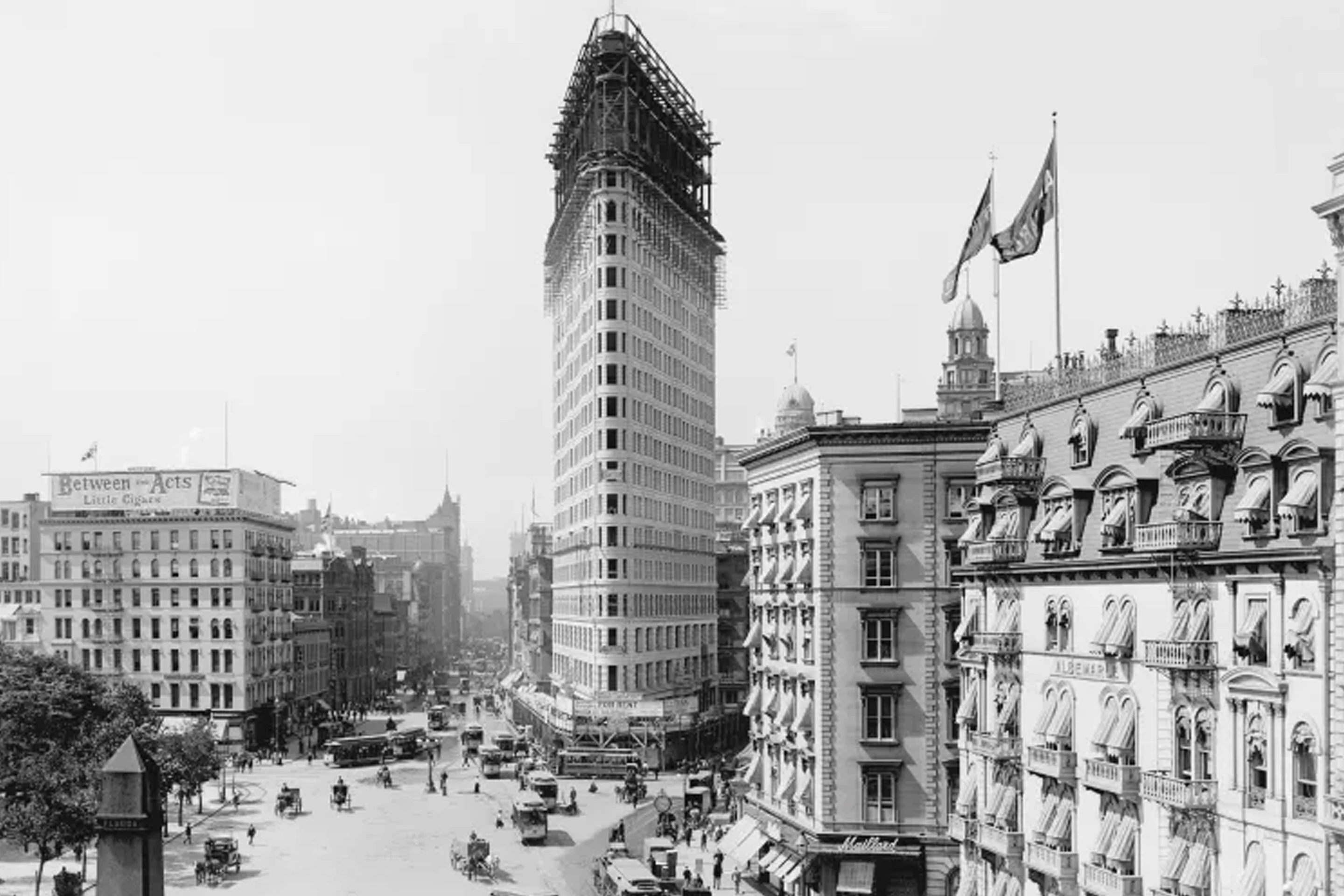
The black-and-white film, captured on October 8, 1902, and shared by the Library of Congress, shows a panorama of the recently completed Flatiron Building. The footage begins at street level, where pedestrians fill the busy Manhattan streets, before the cameraman gradually tilts upward toward the top of the 24-storey structure.
According to the Library of Congress, the footage shows “a view looking south from Madison Square, across the intersection of Broadway, Fifth Avenue, and Twenty-third Street, to New York’s famous skyscraper, the Fuller (or ‘Flatiron’) Building, with a panorama of the surroundings.”
The description notes that the cameraman “elevates his camera, going from street level to the roof.”
Completed in 1902, the 307-foot-tall Flatiron Building was among the world’s earliest skyscrapers and became famous for its distinctive triangular shape and pioneering steel-frame construction.
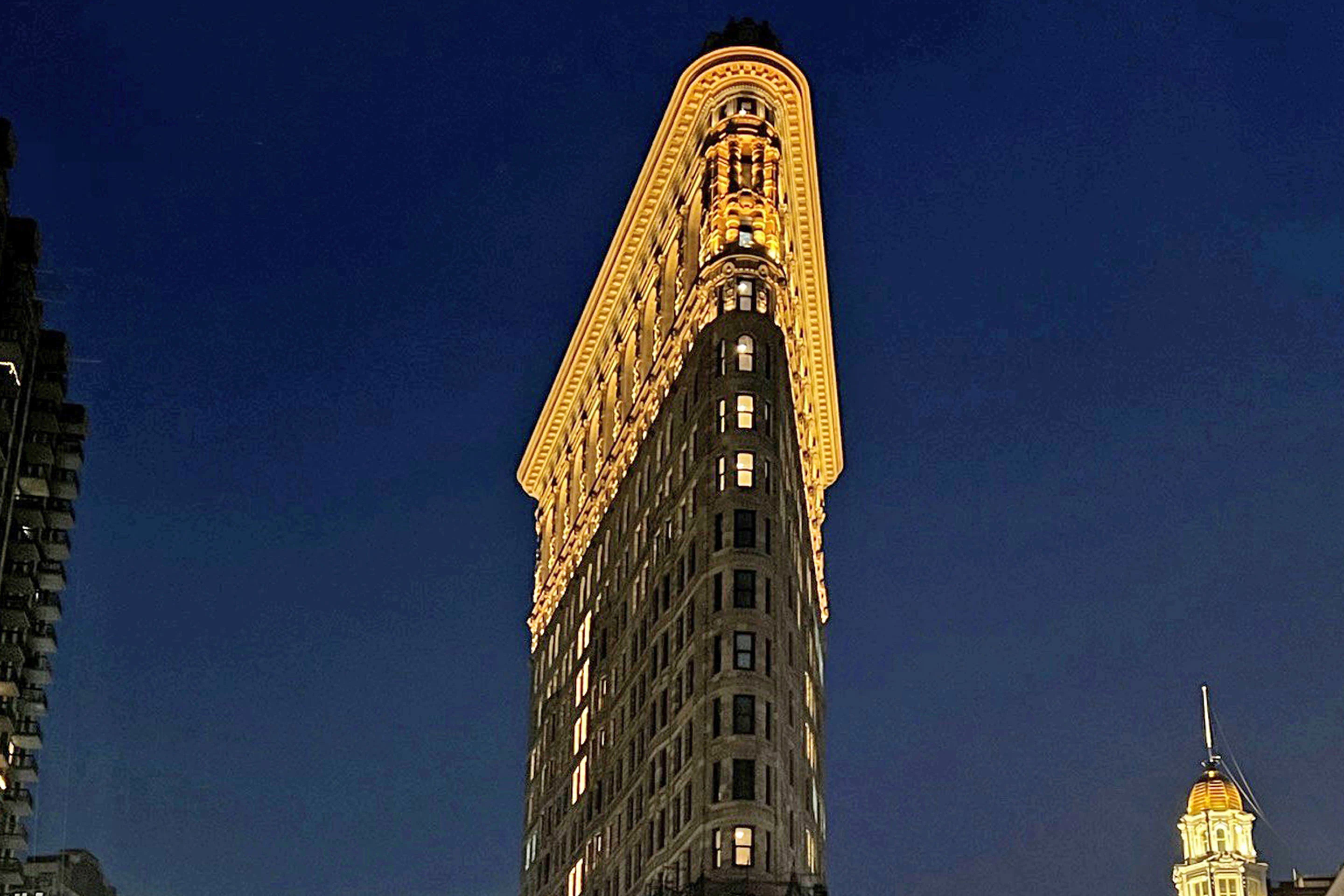
Today, the Flatiron Building is undergoing a major transformation of its own. Last month, the landmark was illuminated for the first time in its 124-year history, marking a significant milestone in its conversion into private residences.
The project reflects a broader movement to restore and repurpose historic buildings across New York City and the United States.
According to the American Institute of Architects, nearly half of America’s 125 million buildings are at least 50 years old. Meanwhile, a recent report by RentCafe found that almost 25,000 apartments were created through office and building conversions nationwide in 2024, a 50 percent increase from the previous year.
An Iconic Building That Once Dominated the Skyline
For New Yorkers of the early 20th century, the Flatiron Building represented a dramatic change in the city’s built environment.
“The Flatiron Building was one of the earliest of New York City’s new skyscrapers at the time,” historian Kevin Draper, founder of NY Historical Tours, told Newsweek.
Draper explained that many residents questioned whether such tall buildings were necessary and voiced concerns about their impact on the surrounding area. Critics worried that the new tower would cast shadows across Madison Square Park during a period when Madison Square Garden still occupied the neighborhood.
The debate may sound familiar to modern New Yorkers. Draper noted: “It’s funny that people today make comments about Billionaire’s Row and that those supertall buildings will cast shadows on Central Park, so these complaints and fears are actually a century old.”
He said people at the time were already discussing whether laws should limit building heights and prevent skyscrapers from becoming too tall, which are “the same conversations happening today.”
The footage also highlights how imposing the building appeared when it first opened. According to Draper, the film reveals “just how much taller the Flatiron Building was then compared with the other buildings around it.” He described this as ironic because the Flatiron now appears relatively small when viewed against the much taller towers that have since risen nearby.
Glimpses of Everyday Life in Manhattan in 1902
Beyond the architecture, the film offers a rare look at daily life in Manhattan at the start of the 20th century.
“It’s still very much the same that the streets are still somewhat crowded and that people then, as now, always seem to be in a rush to get where they’re going,” Draper told Newsweek.
The transportation visible in the footage also captures a city in transition. Draper observed that only a single “horseless carriage”—an early automobile—can be seen passing through the scene. By contrast, several streetcars and numerous horse-drawn carriages appear throughout the film.
Those forms of transport have largely disappeared from New York’s streets. Streetcars are gone entirely, while horse-drawn carriages survive primarily as tourist attractions around Central Park, he noted.
The Dawn of the Skyscraper Age
The Flatiron Building emerged during a formative period in New York’s architectural history. Advances in steel-frame construction and elevator technology were allowing buildings to reach unprecedented heights, transforming Lower Manhattan and Midtown.
Before the Flatiron’s completion, several pioneering skyscrapers had already reshaped the city’s skyline, including the New York World Building, completed in 1890, which was the tallest in the city at the time. The Park Row Building, which was completed in 1899, briefly became one of the tallest office buildings in the world.
Yet the Flatiron stood apart because of its striking form and prominent location at the intersection of Broadway and Fifth Avenue.